
Learn how to make cottage cheese from raw milk at home! The easy way, with no rennet, culture or anything like that. It's actually really simple, and the best part? You will know what's actually in your cottage cheese.
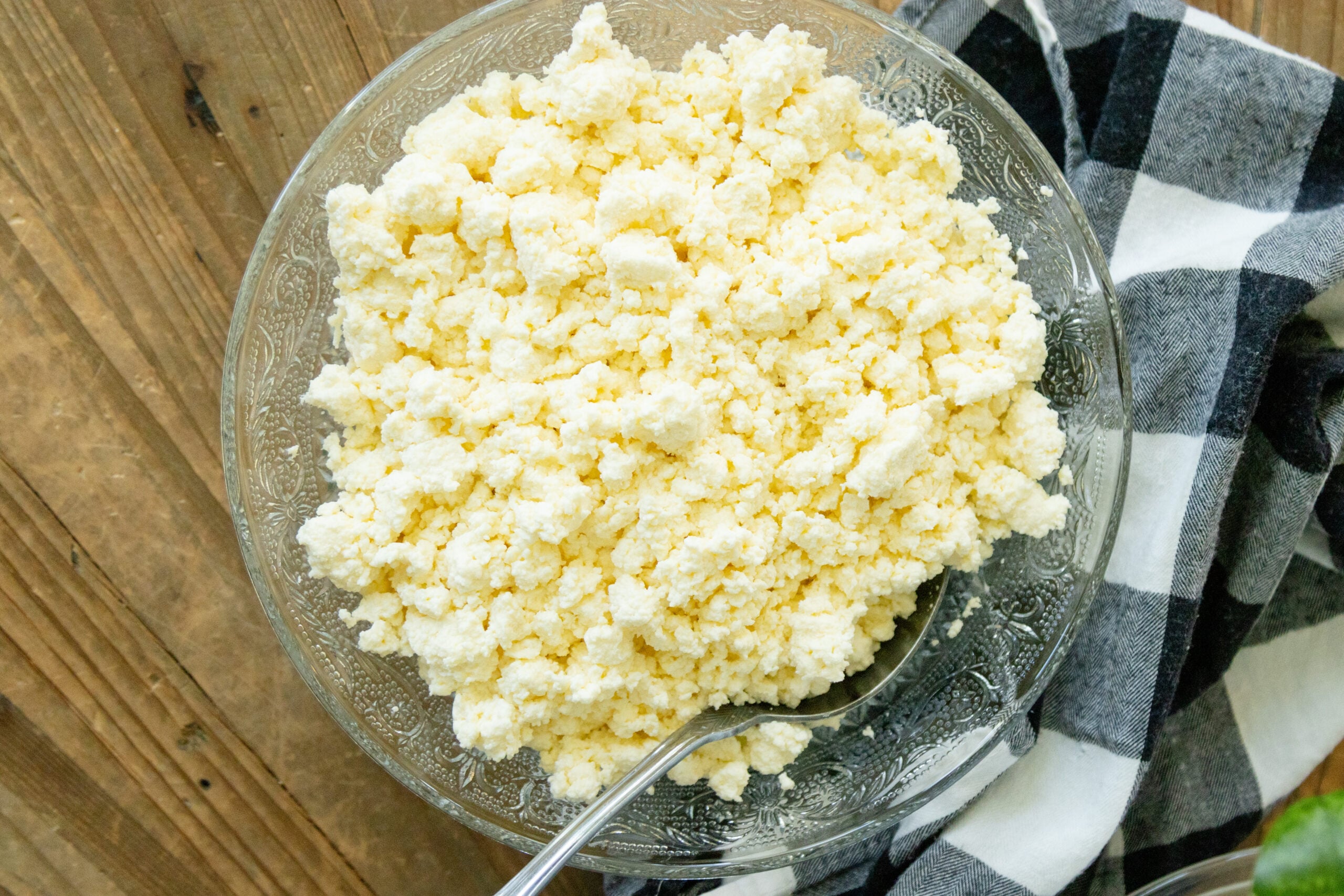
An Easy Homemade Cottage Cheese Recipe
Along with making raw milk butter and homemade yogurt, I have also been making our own cottage cheese with raw milk these days.
Also, I may have become a little obsessed with checking ingredient labels on things. Because did you ever check out the ingredients in a container of cottage cheese? Yeah, ugh. Not great. But good news, you can make your own homemade cottage cheese!
I will say, if you are used to the texture of Prairie Farms cottage cheese, just know that this texture will be a little different than really any store-bought cottage cheese. (And for good reason, we won't be adding any stabilizers and shelf life extenders and such things:)
Anyways. Since we have raw milk, I thought I'd give cottage cheese a try! And actually, I haven't bought any at the grocery store since then. (Wow! I wish all my raw milk experiences would be this successful. I'm looking at you, sour cream experiment #99.😅)
This is not the traditional old fashioned way of making cottage cheese, like with rennet and bacterial cultures and stuff. We'll be using a few simple ingredients - vinegar, milk, cream and salt. That's it! It's super simple. By now, I've made a bunch of batches of cottage cheese and this is the best way I've found so far!
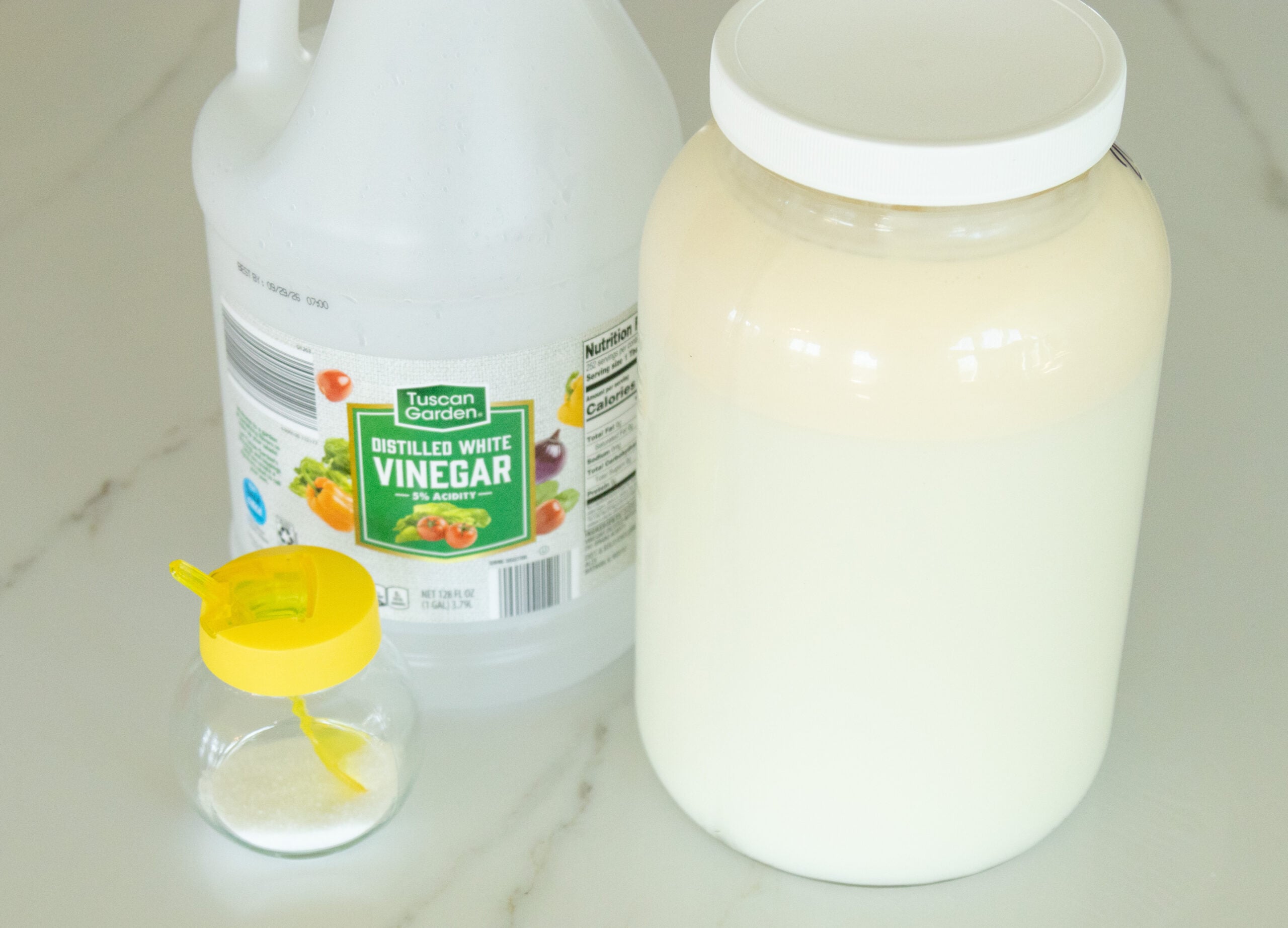
The Ingredient List
- Milk - fresh raw whole milk is what I use
- Vinegar - regular white vinegar or lemon juice
- Salt - I often use Diamond Crystal kosher salt
- Cream - fresh raw cream (can be scooped off the top of the milk before starting)
Find the full recipe on a recipe card down below!
Supplies You'll Need (and what we use)
- Large pot - I go for my large, heavy-bottomed stainless steel pot
- Metal spatula - for stirring the milk
- Thermometer - it's very, very nice to have one of these for making cottage cheese! I use this Instant Read Therma-pen.
- Strainer and cheesecloth - it's nice to have a cheese cloth, but if you don't have any a fine mesh strainer works, too.
- Mixing bowl - a large bowl to to do the final salting, creaming and mixing!
This post contains affiliate links. As Amazon Associates, we may earn a small commission at no extra cost to you when you purchase through our links. Thanks for supporting our little family!
How to make Cottage Cheese from Raw Milk
Pour the gallon of milk into a large stockpot. Heat the milk on medium heat, stirring frequently with a metal spatula. (This can take up to an hour on my stovetop. Heating the milk slowly yields nicer curds, so it pays to have patience here:) until the milk reaches 190° F. If a "skin" forms on the top, you can skim it off or stir it in!

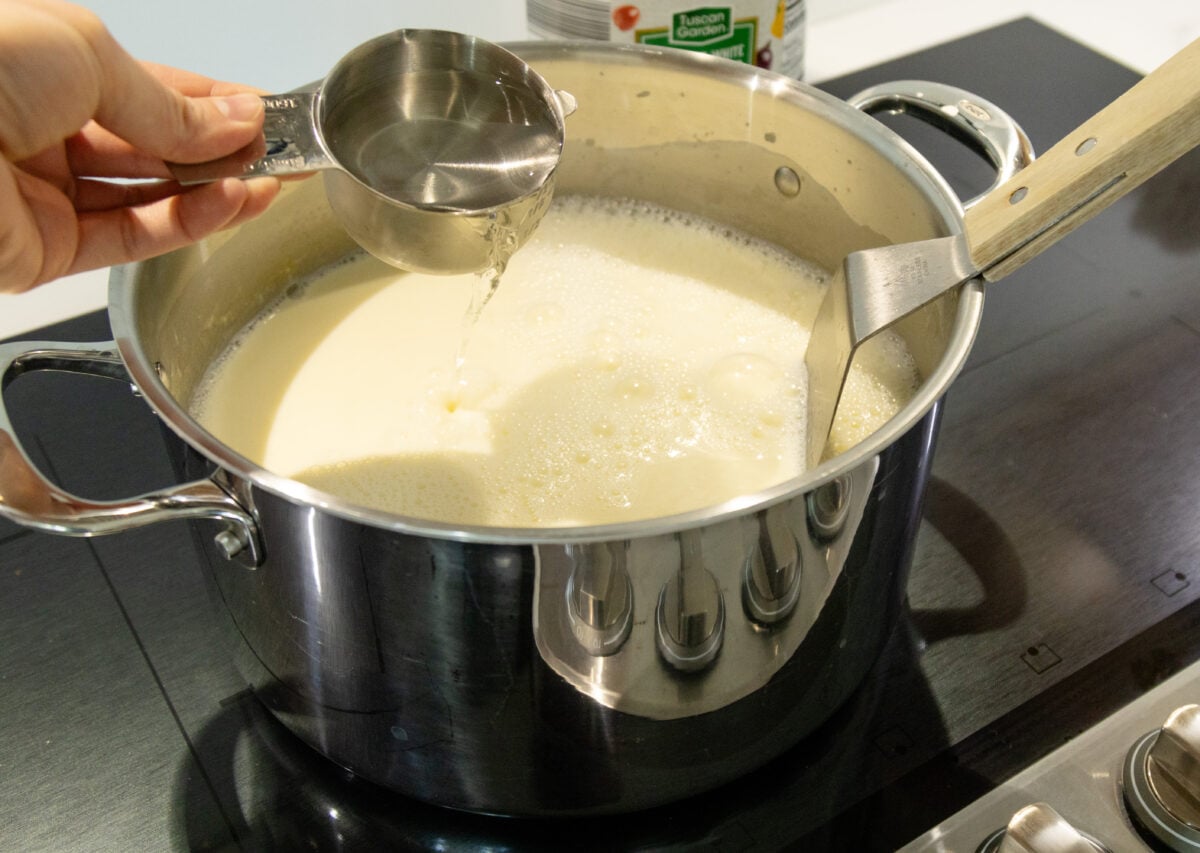
Remove the pot of milk from the heat and add the vinegar. Give it a little stir, and you should see the curds forming almost immediately. Let the mixture set for about 10 minutes, so the curds can fully separate.
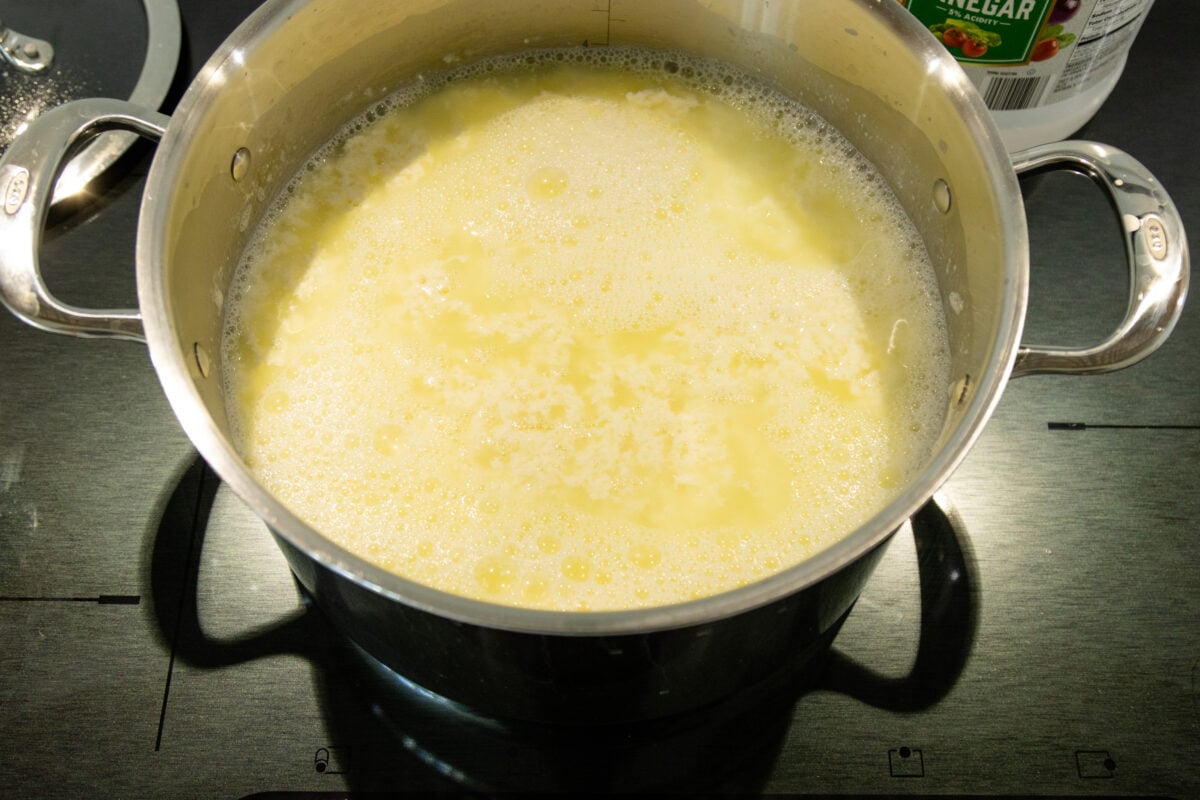
Strain off the whey using a cheesecloth-lined colander or a mesh strainer. (You can keep the whey for another use if you'd like!)
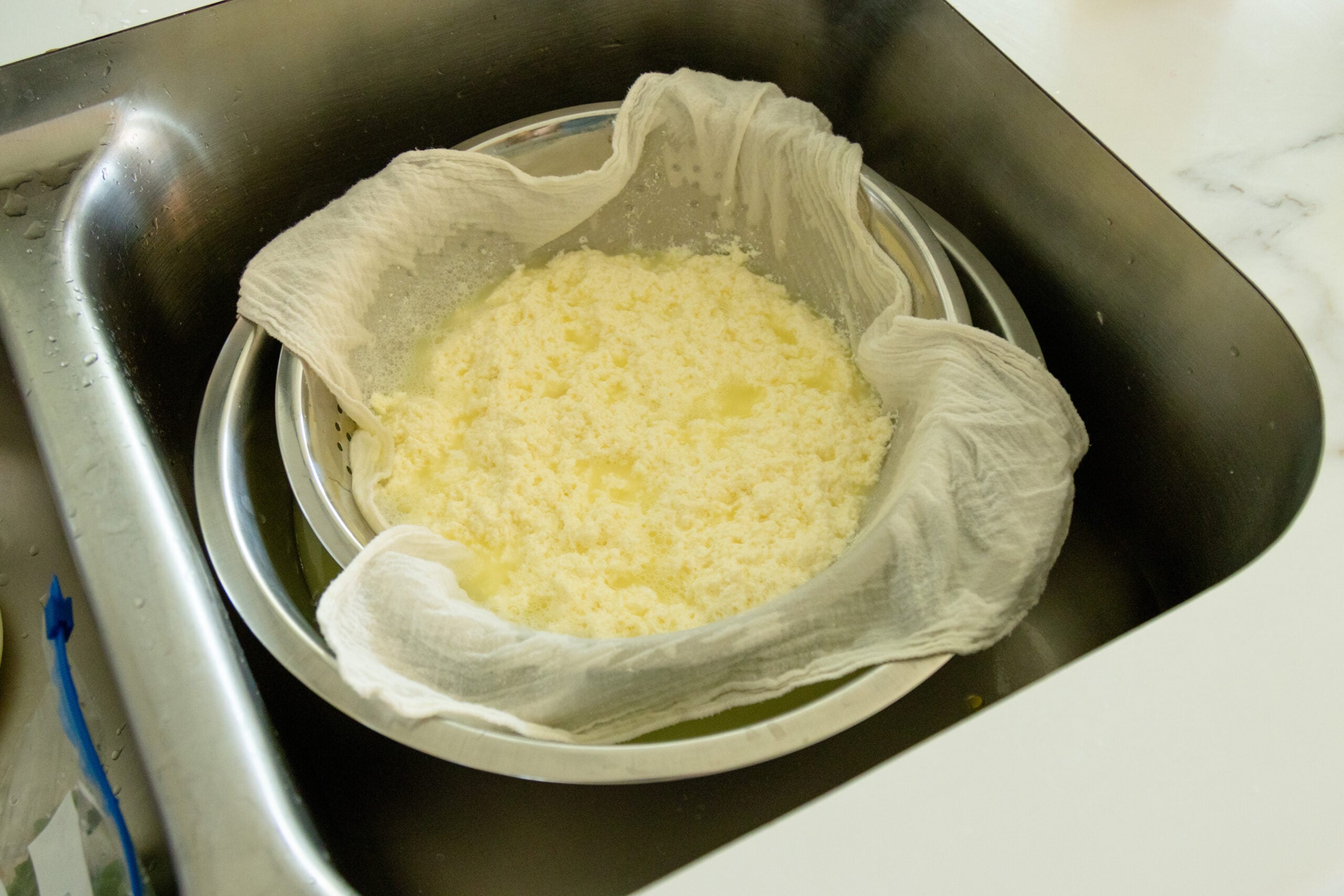
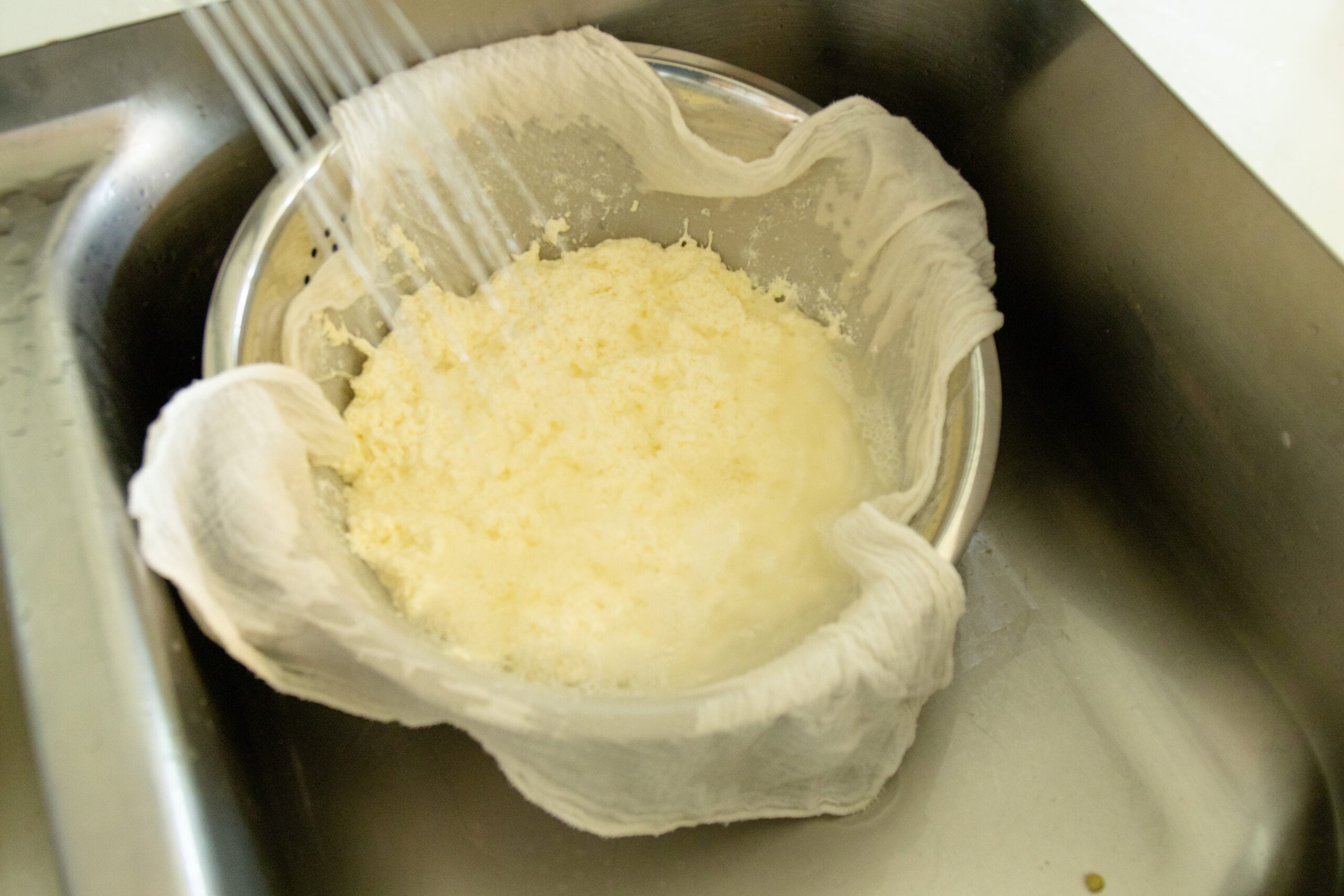
Rinse the curds under gently running, cold water to rinse away any vinegar. Let the curds drain for about 30 minutes.
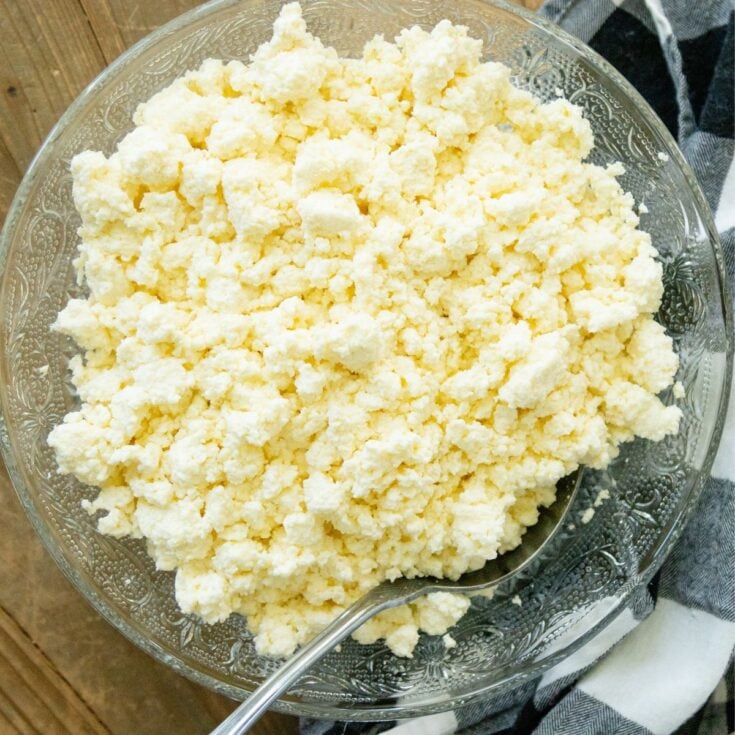
Chop or break the cottage cheese curds into small pieces and toss with cream and salt.

Chill the cottage cheese for an hour or more before serving. Enjoy!

How to Store Homemade Cottage Cheese
Put the cottage cheese in an airtight container and store in the refrigerator for 5-7 days. Though like any raw milk product, cottage cheese is best fresh!
Ways to use Leftover Whey from Cheesemaking
Instead of washing all that whey down the drain, you can save it and use it! Here's a few different ways to use whey:
- Use it in baking recipes, such as bread or cake
- Add it to soup! Anywhere you'd use broth, you can substitute with whey
- Use it for cooking pasta, rice, oatmeal, etc.
- Add it to smoothies
- Feed it to animals
Tips, Tricks and Notes on making homemade cottage cheese
- Use fresh milk. Making cottage cheese may seem like a great way to "save" raw milk before it goes bad, but the curds will taste best made with fresh milk.
- Instead of getting additional raw cream for mixing in at the end, you can scoop off about a cup of cream from the gallon before starting the cottage cheese process, and save it for the end!
- Stir frequently while heating, so the milk doesn't scorch on the bottom.
- Rest time may vary! After adding the vinegar, I like to let it rest only ten minutes, so it doesn't taste "vinegary", but you can let it rest up to 30 minutes.
- Taste test the cottage cheese, especially when adding salt and cream at the end.
- Rather than adding cream at the end, you can mix with regular milk or even plain yogurt for a more creamy cottage cheese!
If you like this post...
...you might also like:
Pin this "How to make Cottage Cheese" post for later!
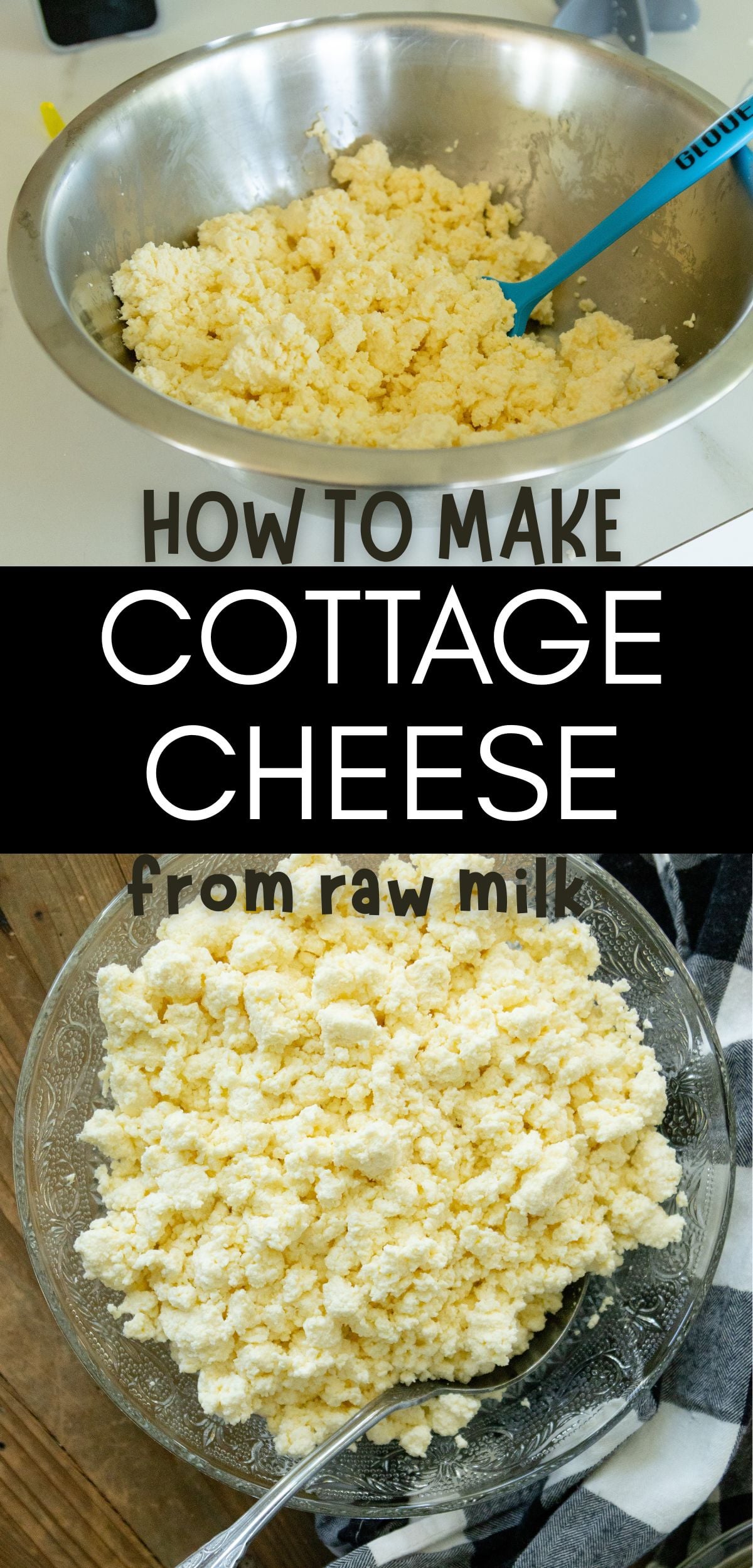
How to make Cottage Cheese from raw milk
Learn how to make cottage cheese from raw milk at home! The easy way, with no rennet, culture or anything like that. It's actually really simple!
Ingredients
- 1 gallon raw milk
- ⅔ cup vinegar
- 2 tsp. salt*
- ½ cup fresh rawcream**
Instructions
- Pour the milk into a large stockpot. Heat the milk on medium heat, stirring frequently with a metal spatula. (This can take up to an hour on my stovetop. Heating the milk slowly yields nicer curds, so it pays to have patience here:) until the milk reaches 190° F. If a "skin" forms on the top, you can skim it off or stir it in!
- Milk curdles best between 185°-195°F, so once the temperature is in that range, remove the pot of milk from the heat and add the vinegar. Give it a little stir, and you should see the curds forming almost immediately. Let the mixture set for about 10 minutes, so the curds can fully separate.
- Strain off the whey using a cheesecloth-lined colander or a mesh strainer. (You can keep the whey for another use if you'd like!)
- Optional: Rinse the curds under gently running, cold water to rinse away any vinegar. Let the curds drain for about 30 minutes.
- Chop or break the curds into small pieces and toss with cream and salt.
- Chill the cottage cheese for an hour or more before serving. Enjoy!
Notes
*Amount of salt needed will vary depending on your salt! If using regular iodized salt, I don't think you'll want to add this much.
**I add cream until it looks right:) somewhere between a half and a whole cup, usually.
Storage: put the cottage cheese in an airtight container and store in the refrigerator for 5-7 days. Though like any raw milk product, cottage cheese is best fresh!
- Use fresh milk. Making cottage cheese may seem like a great way to "save" raw milk before it goes bad, but the curds will taste best made with fresh milk.
- Instead of getting additional raw cream for mixing in at the end, you can scoop off about a cup of cream from the gallon before starting the cottage cheese process, and save it for the end!
- Stir frequently while heating, so the milk doesn't scorch on the bottom.
- Rest time may vary! After adding the vinegar, I like to let it rest only ten minutes, so it doesn't taste "vinegary", but you can let it rest up to 30 minutes.
- Taste test the cottage cheese, especially when adding salt and cream at the end.
- Rather than adding cream at the end, you can mix with regular milk or even plain yogurt for a more creamy cottage cheese!
Nutrition Information:
Yield:
4Serving Size:
1Amount Per Serving: Calories: 148Total Fat: 12gSaturated Fat: 8gUnsaturated Fat: 4gCholesterol: 40mgSodium: 185mgCarbohydrates: 4gSugar: 1gProtein: 3g
Nutritional information is based on third-party calculations and should be considered an estimate only. Actual nutritional content will vary based upon brands used, measuring methods, cooking method, portion sizes, and more.
As always
Thanks so much for being here. You're welcome to stay awhile and explore!
'til next time, we love you and we'll be praying for you,
-Julie

Leave a Reply